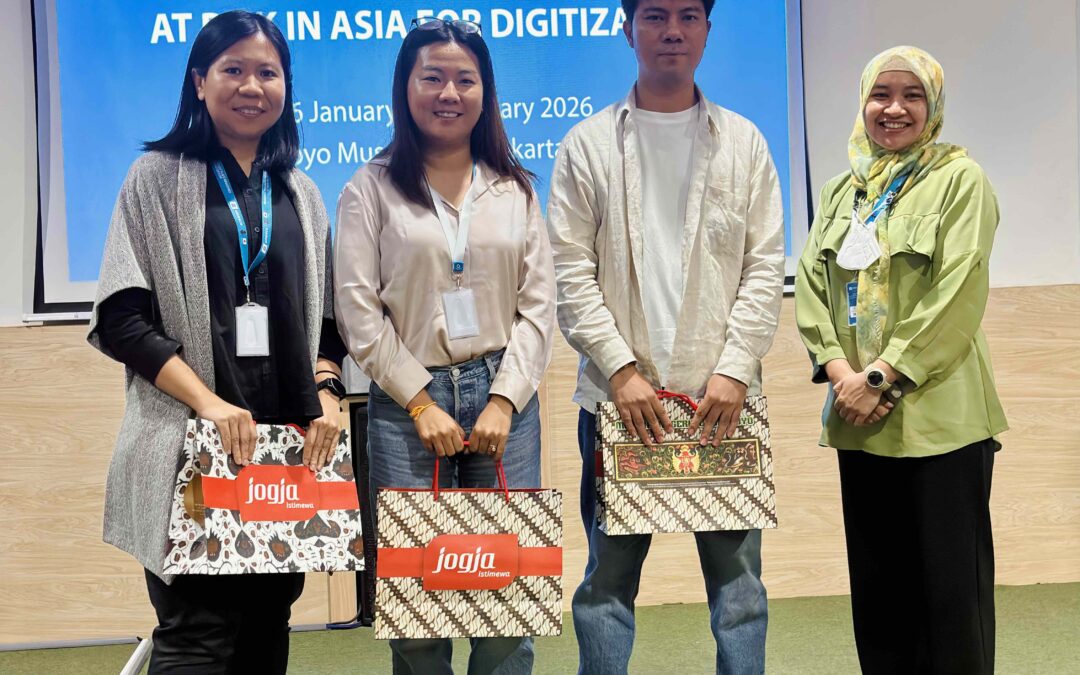
The Save Myanmar Film team recently participated in a one-week Glass Plate Negatives (GPN) Workshop held at the Sonobudoyo Museum in Yogyakarta, Indonesia, from 26 January to 1 February 2026 which was organized and funded by UNESCO–JFIT under the project “Glass Plate Photography Collections at Risk in Asia. ”The training focused on key areas of photographic preservation, including environmental monitoring, condition assessment, cleaning techniques, and preparation for long-term storage and digitization. Through discussions with regional institutions, the team explored common challenges in preserving glass plate negatives, particularly in tropical climates. High humidity, temperature fluctuations, and biological threats such as mold were identified as major risks. The training emphasized preventive conservation strategies, including proper handling, improved storage, and the use of appropriate archival materials. Participants also received practical training in cleaning techniques, condition reporting, and safe handling procedures, following the principle of minimal intervention.
The workshop further introduced environmental monitoring tools, enabling institutions to track temperature and humidity changes and better understand their impact on collections. In addition, participants designed and created protective enclosures using locally available archival materials, promoting sustainable and affordable solutions. The knowledge gained is highly relevant to Myanmar, where tropical conditions and limited infrastructure pose ongoing risks to photographic heritage. By applying these newly acquired skills, Save Myanmar Film aims to strengthen preservation practices and support the long-term safeguarding and digitization of glass plate negative collections since glass plates negatives are also audio-visual heritages of Myanmar.
Recent Comments